
improvement in forecast accuracy during high-demand scenarios
buildings with automated, reliable seasonal projections replacing manual spreadsheet-based processes
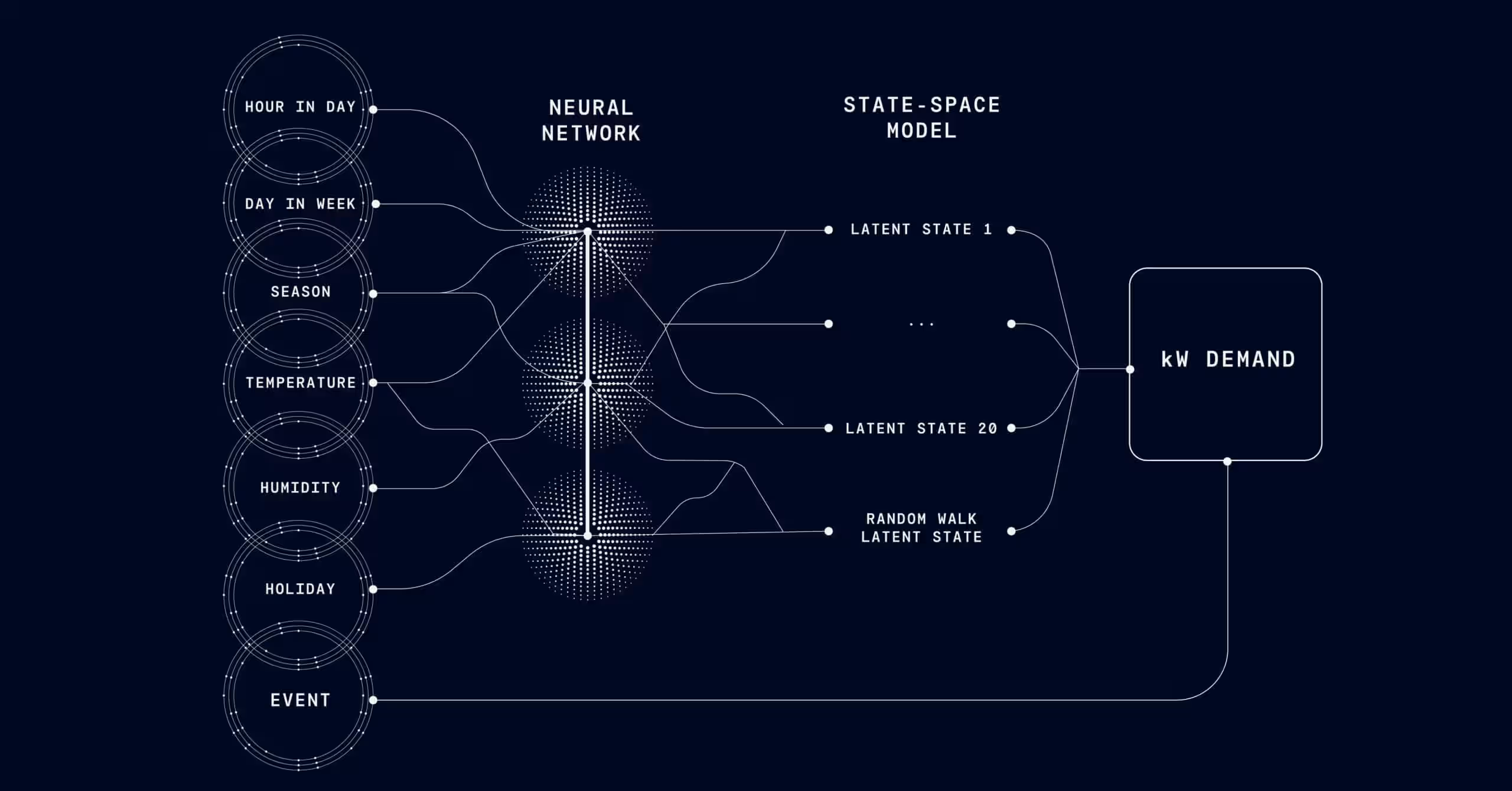
shared model architecture fine-tuned per building, from subway stations to wastewater treatment facilities

An energy management firm needed to forecast electricity demand across approximately 1,000 buildings in New York to support demand-response and energy-efficiency programs such as NYISO’s Special Case Response.
The existing process was slow, manual, and error-prone—relying on spreadsheets and rough estimations to determine seasonal commitments. The forecasts had to be both granular (hourly) and long-range (up to six months), while accounting for complex, interacting seasonal patterns across a wide variety of building types.
OneSix developed a forecasting and simulation engine powered by deep learning. The solution included:
The system was built using PyTorch and integrated with Torchcast to manage temporal data modeling and training workflows.
More to explore

OneSix implemented machine learning models for a financial services client to optimize marketing spend, resulting in a strategic reallocation that improved ROAS from 0.5-0.8x to 1.5x and achieved the client’s first quarter of positive marketing ROI.

OneSix worked with a global art gallery to develop a tailored AI strategy, facilitating a collaborative workshop to identify and prioritize AI use cases aligned with their business goals. The workshop provided a clear, actionable roadmap, helping the gallery confidently move forward with high-priority AI initiatives.

Through a three-phase approach, including a comprehensive assessment, tailored recommendations, and a clear roadmap, OneSix helped the bank set the foundation for improved operational efficiency, enhanced customer experiences, and future-ready data strategies.