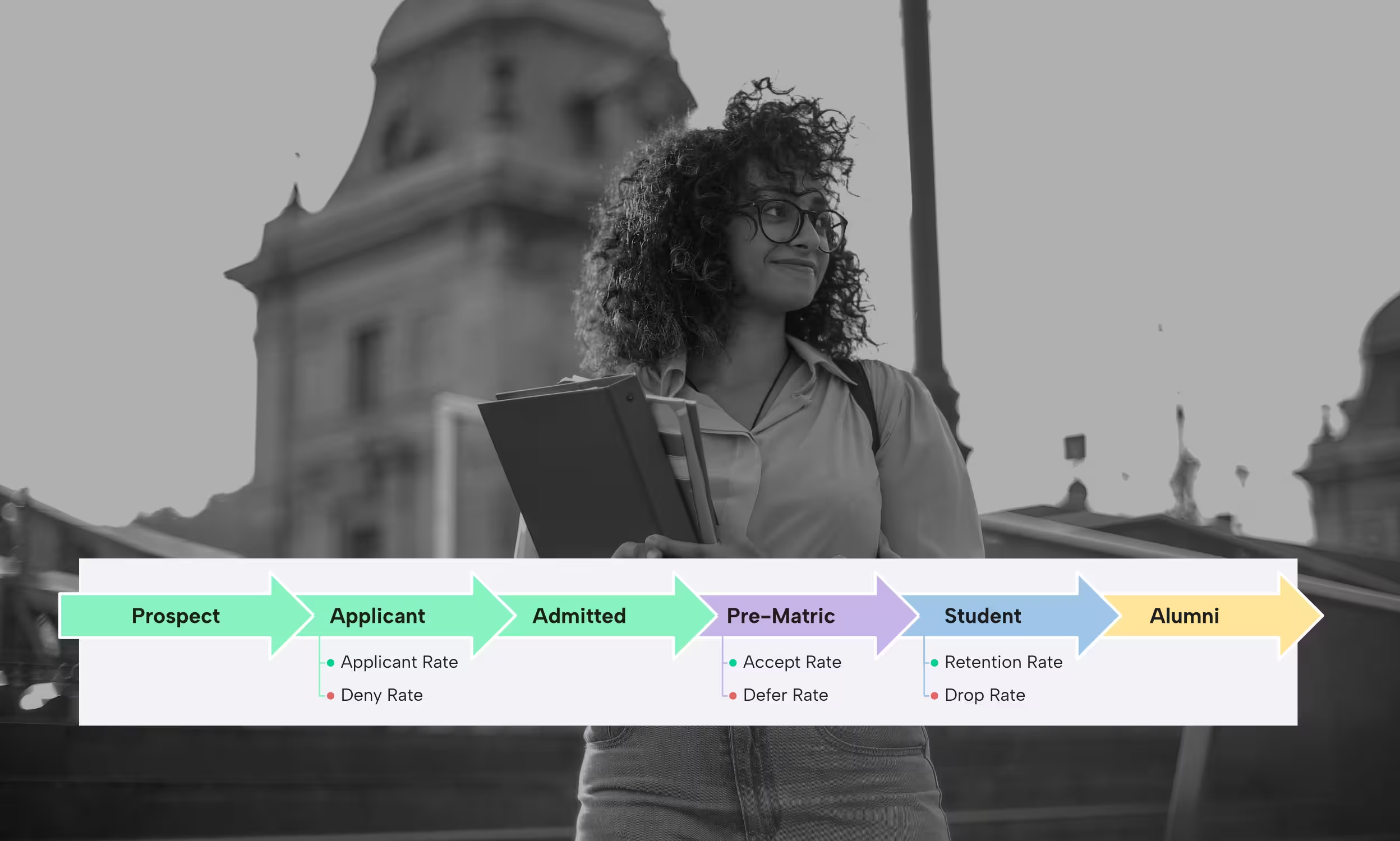
Backed by deep higher education domain expertise, we unify data, govern it as a trusted institutional asset, and engineer the AI that moves students, donors, and faculty through every stage of the lifecycle.
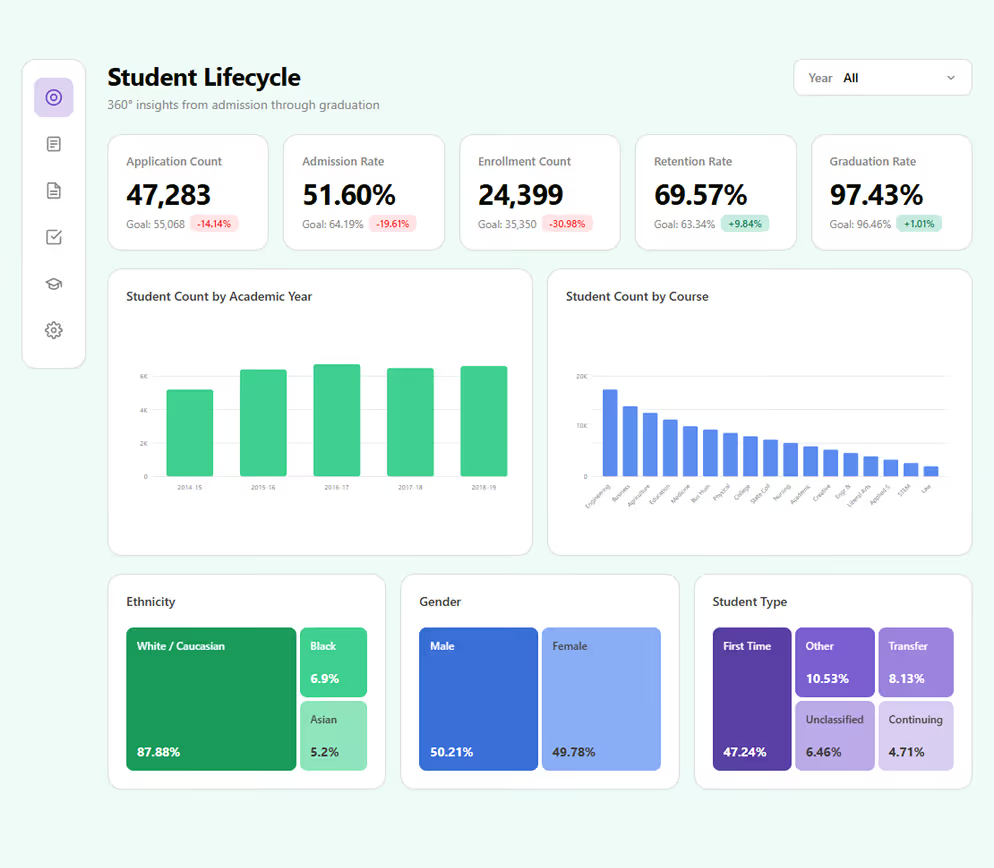
A 360-degree view of the student lifecycle, benchmarked against goal.
CHALLENGES
Student, donor, and faculty data lives across SIS, CRM, LMS, financial aid, and hundreds of other applications. A complete picture of any journey requires manual reconciliation that slows every team that depends on it.
Enrollment, retention, and advancement strategies run on historical averages instead of real-time propensity signals. By the time the pattern is visible, the window to act has closed.
Advancement and foundation teams manage thousands of prospects without the data infrastructure to personalize outreach, prioritize high-propensity donors, or measure what is driving giving.
Different definitions across the provost's office, enrollment, finance, athletics, facilities, and faculty affairs slow decision-making and erode confidence in the data across the institution.
Capabilities
We unify student, donor, and faculty data across the hundreds of applications institutions run on, govern it as a productized asset, and engineer the AI that drives data-driven decisions across every stage of the lifecycle.

Identify the highest-value use cases for your institution and produce a prioritized roadmap tied to enrollment, retention, advancement, and institutional goals

Design the data ownership, access control, and FERPA compliance framework the institution needs to operate AI defensibly across constituent data

Unify student, donor, and operational data into a centralized, reliable platform built on Snowflake

Deliver real-time visibility into enrollment forecasting, student retention, student success, advancement performance, and the cross-functional metrics leadership relies on

Deploy predictive models, conversational interfaces, document intelligence, and agentic workflows that move students and donors through the lifecycle

Automate lineage tracking, data definitions, stewardship, and policy enforcement so the data behind every institutional decision stays trustworthy

Embed a dedicated team for continuous delivery and innovation across the institution's evolving data and AI priorities
Use Cases
Use Case
What it does
Use Case
What it does
Unified student and donor data with lifecycle stage tracking, relationship intelligence from CRM notes and meeting data, and behavioral segmentation across alumni and donor populations.
Use Case
What it does
Predictive scoring for graduation likelihood, donor willingness to give, planned giving propensity, event attendance, and ambassadorship, with ask-amount guidance for advancement teams.
Use Case
What it does
Connect recruitment and advancement marketing to enrollment and giving outcomes through MMM, MTA, A/B testing, response modeling, and campaign intelligence.
Use Case
What it does
AI-driven recommendations for prioritizing outreach, improving yield, and engaging students and donors at the right moment in the journey.
Use Case
What it does
Forward-looking models for enrollment, retention, capacity planning, and predictive maintenance across campus facilities.
Use Case
What it does
Intelligent interfaces that reduce administrative burden and improve access to institutional resources.
Use Case
What it does
AI that extracts and routes insights from research documents, applications, transcripts, and academic records.
FAQs


FERPA compliance is engineered into every higher education engagement. Our Governance Blueprint translates FERPA requirements into platform-level controls (role-based access, lineage, and policy enforcement) integrated with your data architecture from day one rather than retrofitted under audit pressure.
Our work spans state university systems, ivy league and Big 10 research universities, mid-size private institutions, graduate and business schools, and academic medical centers. Engagements scale to the size and complexity of the institution; the deliverables are scoped to fit. For institutions with a clinical or research component, we bring deep healthcare and life sciences experience to AMC-specific work, including LCME accreditation and clinical research data.
Most start with a Data & AI Strategy: a focused discovery to identify and prioritize the highest-value use cases (enrollment forecasting, student retention, donor propensity, governance modernization, or others), followed by a phased roadmap. From there we move into delivery based on what the strategy surfaces as the most critical priority.
Yes. We design around your environment (Banner, Workday, PeopleSoft, Salesforce, Raiser's Edge, ServiceNow, Canvas, Blackboard, Wealth Engine, the National Student Clearinghouse, and the hundreds of other applications that institutions actually run) and engineer on what you already have. The value comes from looking at these sources together rather than discretely. That’s where the insights live. For institutions in the Snowflake ecosystem, we bring deep platform expertise that accelerates delivery and reduces integration complexity.
Deep technical capability paired with genuine higher education domain expertise. We have delivered modern data platforms, donor science, and student lifecycle analytics across state systems, ivy league universities, Big 10 institutions, private universities, and graduate and business schools, using accelerators and frameworks engineered for the way universities actually operate.