
By early 2025, AI crossed a critical threshold. What was once experimental became practical, accessible, and embedded into real business workflows. As organizations move into 2026, the challenge has shifted again.
AI success is no longer limited by technology. It is limited by enterprise readiness.
Insights from Snowflake’s AI + Data Predictions 2026 make this clear: while AI capabilities continue to advance rapidly, most organizations struggle to translate those advances into consistent, enterprise-wide impact without strong data foundations, governance, and operating models.
Several forces accelerated this shift:
These advances unlocked new opportunities, but they also exposed foundational gaps in data quality, governance, and enterprise operating models.
To understand why enterprise readiness matters so much in 2026, it helps to look at how quickly AI has evolved over the past decade.
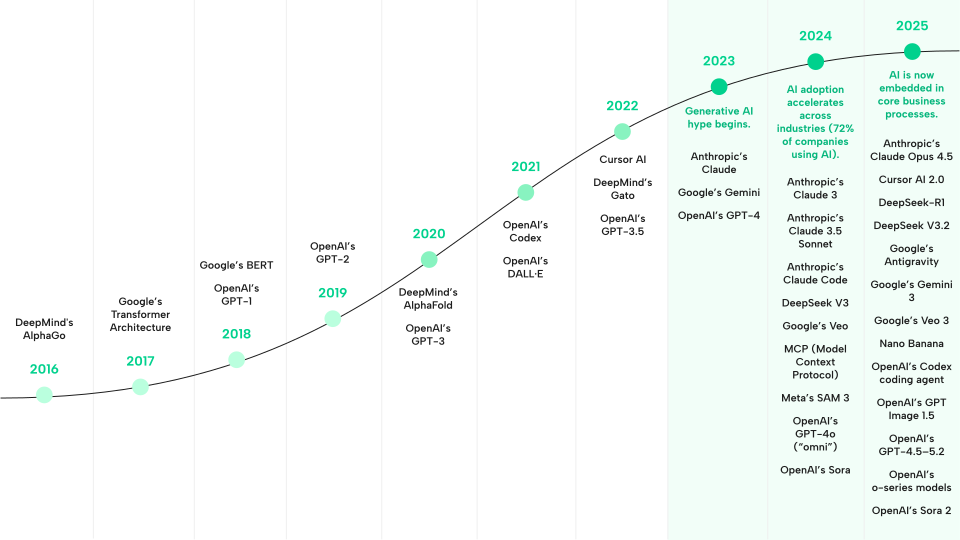
Early advances between 2016 and 2020 laid the technical foundation. Breakthroughs like Transformers, BERT, and early GPT models showed that large-scale machine learning could generalize across tasks. From 2021 to 2022, progress accelerated as models such as Codex, DALL·E, and GPT-3.5 demonstrated clear business value through code, image, and text generation.
The real inflection point came in 2023 and 2024. Generative AI moved into the mainstream, driven by models like GPT-4, Claude, Claude 3, and Claude 3.5 Sonnet. AI shifted from experimentation to everyday use, becoming embedded in workflows—particularly across software development.
That shift accelerated further in 2025. Tools like Claude Code saw rapid adoption and feature expansion, signaling a move from AI-assisted coding to AI-native development. Capabilities pioneered by OpenAI Codex were increasingly absorbed into general-purpose models, speeding adoption across engineering teams.
This period also marked a move beyond text. Multimodal and generative video models—including Sora, Sora 2, and Google’s Veo 3—showed that AI could reason and generate across visual, audio, and temporal inputs, expanding enterprise use cases well beyond language and analytics.
AI is now embedded in core business processes. Automation and augmentation are operational, supported not only by more capable models (Claude Opus 4.5, GPT-4.5–5.2, Gemini 3, DeepSeek-R1, DeepSeek V3.2), but by maturing infrastructure designed for scale.
Tooling for agentic systems also advanced rapidly. Frameworks such as OpenAI’s Agents SDK, emerging Claude agent tooling, and protocols like MCP helped standardize how AI systems plan, execute, and interact with enterprise data and tools. Combined with orchestration layers, LLM gateways, and observability tools, these advances made AI systems easier to deploy, govern, and monitor in production.
The takeaway is clear: model innovation is no longer the constraint. The challenge for 2026 is execution—building the platforms, data foundations, and governance required to scale AI across the enterprise.
Foundation models are now the backbone of modern AI strategies. Snowflake’s report emphasizes that large language and reasoning models have matured to the point where they can support production workloads across industries, if enterprises are prepared to operationalize them.
Models such as GPT, Gemini, Claude, and Llama now offer:
In 2025, these capabilities made AI experimentation easy. In 2026, they enable platform-based AI adoption.
This shift was supported by the maturation of LLM infrastructure:
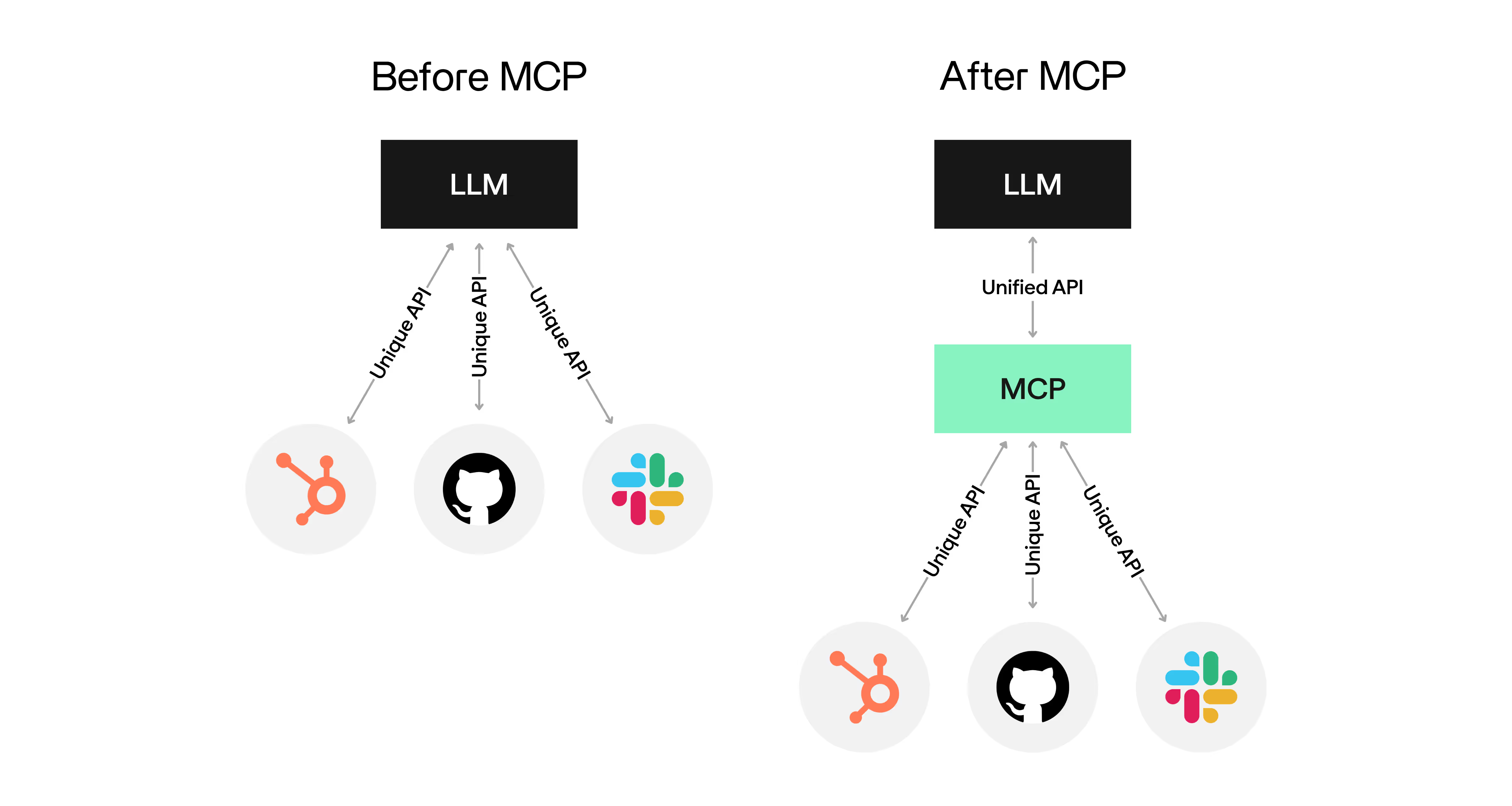
Together, these advances allowed enterprises to move beyond isolated implementations toward repeatable, governed AI platforms. Leading organizations are now:
Snowflake highlights this shift as a move from isolated AI wins to connected AI ecosystems, where value compounds across the enterprise. This transition—from projects to platforms—is what enables scale, consistency, and governance.
As foundation models reduce the technical barrier to entry, data readiness becomes the primary constraint on enterprise AI success.
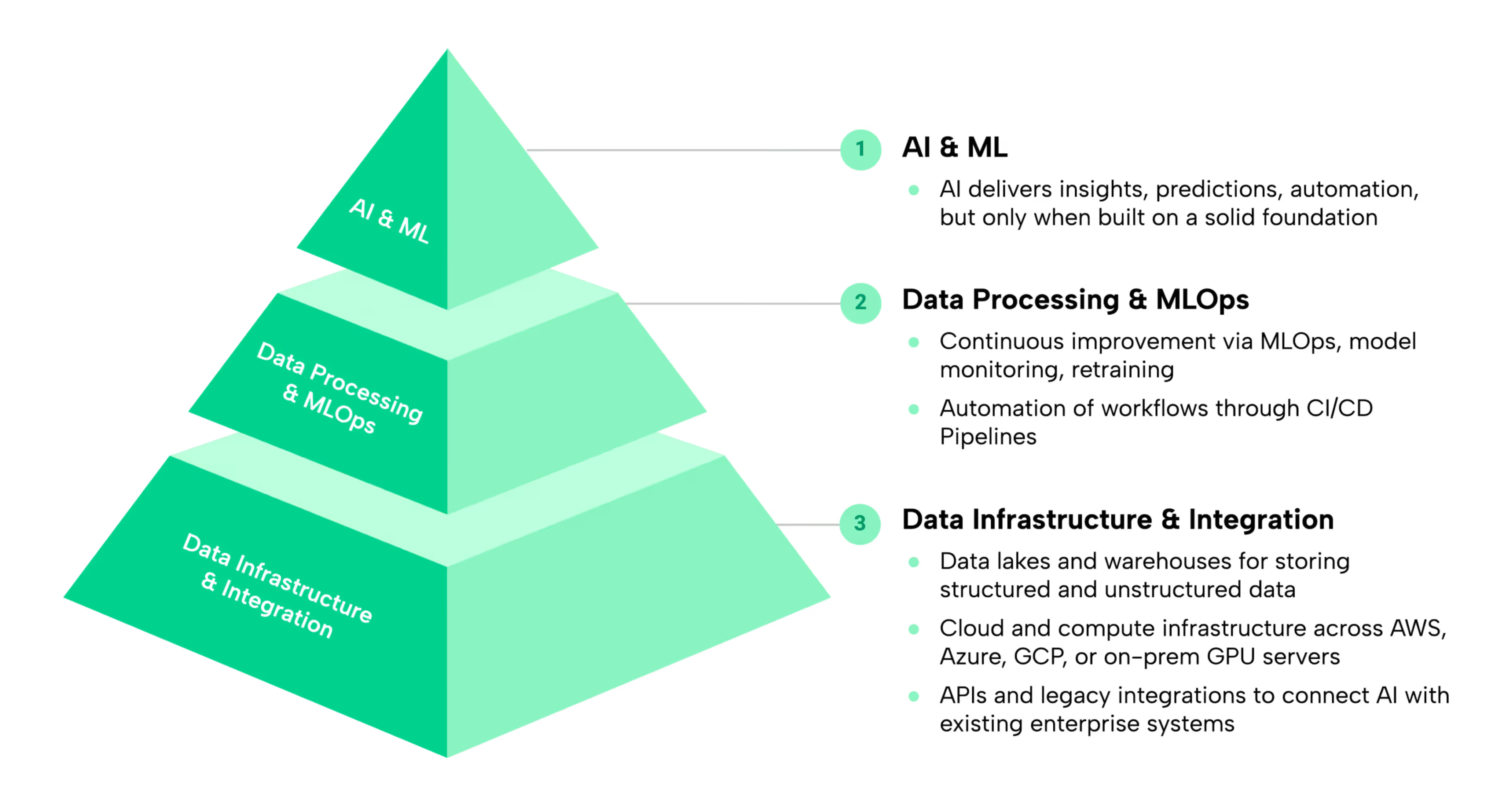
Snowflake’s research repeatedly reinforces this point: organizations with governed, high-quality, and well-understood data will scale AI faster—and more safely—than those still addressing basic data challenges.
General-purpose AI is powerful, but enterprise value depends on domain-specific accuracy.
Fine-tuning and domain adaptation allow organizations to customize AI for their business without building models from scratch:
Snowflake also notes that agentic AI is especially sensitive to gaps in enterprise data and undocumented decision logic, making data readiness a prerequisite for autonomy.
Multimodal and agentic AI represent the most visible evolution of AI capability. Snowflake describes agentic AI as the shift from systems that generate responses to systems that reason, plan, and act more like coworkers than tools.
Early enterprise use cases already include:
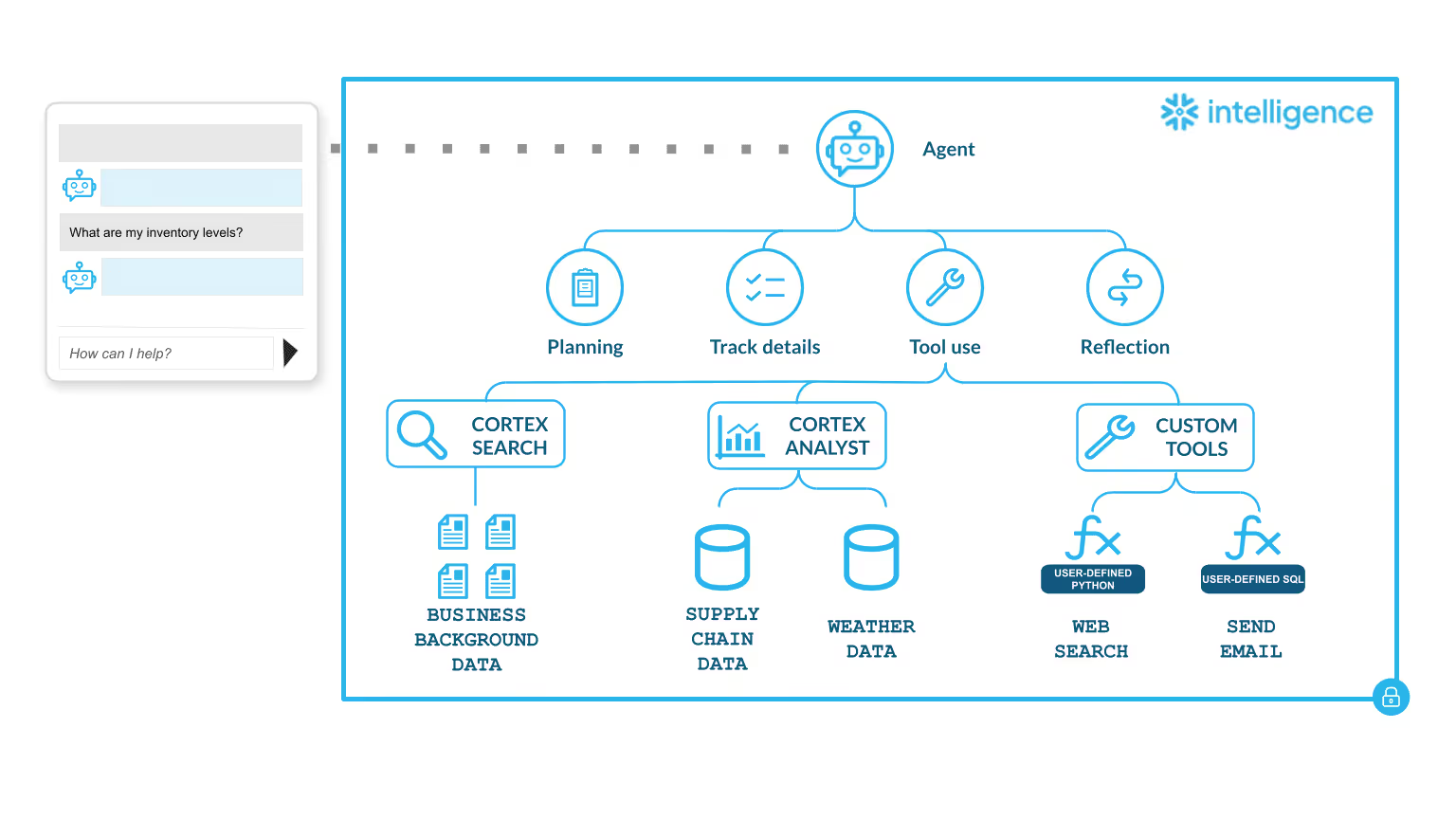
Despite rapid progress, Snowflake predicts that 2026 will be defined by measured adoption, not full autonomy. Why?
The most successful organizations will deploy agents in bounded, high-confidence scenarios, with humans firmly in the loop.
While most enterprise AI progress has focused on software, data, and digital workflows, physical AI and robotics are beginning to show meaningful signs of progress.
The most visible advances are in fully autonomous vehicles. Robotaxi deployments, led by companies like Waymo, represent a major milestone in physical AI: systems that can perceive, reason, and act in complex real-world environments with minimal human intervention. While still geographically constrained, these deployments demonstrate how far perception, planning, and real-time decision-making have advanced.
Drones are another area of rapid improvement. Companies such as Amazon have invested heavily in autonomous drone technology, applying AI to navigation, obstacle avoidance, and delivery logistics. These systems highlight the potential of physical AI in last-mile operations, while also underscoring the challenges of safety, regulation, and real-world variability.

For enterprises, the takeaway is: physical AI is advancing, but still early. Unlike software-based AI, physical systems amplify risk, require extensive testing, and demand high-confidence data. Organizations that succeed in physical AI will be those that invest early in data foundations, governance, and operational readiness, long before autonomy becomes widespread.
AI is no longer optional. The barrier to entry has fallen, and competitive advantage now depends on execution. The path forward is clear: