Microsoft Copilot + Snowflake Cortex Agents: The Best of Both Worlds
Written by :
Jonathan Kolar, Sr. Lead Consultant
January 29, 2026
As enterprises move from AI experimentation to real, production-grade use cases, one challenge keeps surfacing: how do you balance ease of adoption with depth of control? Microsoft Copilot and Snowflake Cortex Agents each solve part of that puzzle, but together, they unlock something far more powerful.
This post explores how Microsoft Copilot and Snowflake Cortex Agents complement each other, when each platform shines on its own, and why combining them creates a pragmatic path to enterprise AI at scale.
Understanding the Copilot Ecosystem
“Copilot” isn’t a single product. It’s an ecosystem.
For enterprises, the center of gravity is Microsoft 365 Copilot, which brings generative AI directly into the tools people already use every day: Word, Outlook, PowerPoint, Excel, Teams, and Copilot Chat. The experience is grounded in:
Microsoft Graph for user context (documents, emails, chats)
Enterprise data protection, keeping prompts and responses within the tenant
In-app AI, reducing friction and training overhead
Where Copilot really becomes interesting, however, is with Copilot Agents.
Using Copilot Studio, organizations can create task-focused agents that guide users through predictable, repeatable processes. Everything from proposal generation to document analysis and operational workflows.
The result: fast time-to-value, low barriers for adoption, and AI that shows up where work already happens.
Where Snowflake Cortex Agents Excel
Snowflake Cortex Agents approach the problem from the opposite direction. Instead of starting with the user interface, Cortex starts with data. Built directly into the Snowflake platform, Cortex Agents are designed for:
Hybrid search over structured and unstructured data
Low-latency vector search and indexing with Cortex Search
SQL-first, deterministic analytics with Cortex Analyst
Strong governance with native RBAC, row-level and column-level security, masking, and lineage
Enterprise-ready UI with Snowflake Intelligence
Cortex shines when:
Your data is already centralized in Snowflake
Your team has done the hard work of documenting your tables and columns with business descriptions
Accuracy and traceability matter more than conversational polish
Analysts and engineers need fine-grained control over logic, prompts, and queries
In short, Cortex Agents are powerful, and if you’ve read this far, then you’re prepared to handle Cortex’s more mature technical aspects.
Copilot vs. Cortex: Not a Competition
It’s tempting to frame this as a head-to-head comparison. In reality, Copilot and Cortex solve different problems.
Copilot Strengths
Adoption: Extremely fast; low learning curve
UX: Rich, guided, conversational
Orchestration: Strong workflows and tool chaining
Data Control: Document-centric
Analytics: Good for summaries and content
Cortex Strengths
Adoption: Fast, low-friction adoption for teams already using Snowflake
Orchestration: Agent instruction, verified queries and semantic model drive behavior and context
Data Control: Deep governance and tuning, seamlessly utilizes your existing RBAC model
Analytics: Excellent for precise analysis on relational data
Each platform has unique strengths. And that’s exactly why combining them works so well.
The Best of Both Worlds: Copilot + Cortex
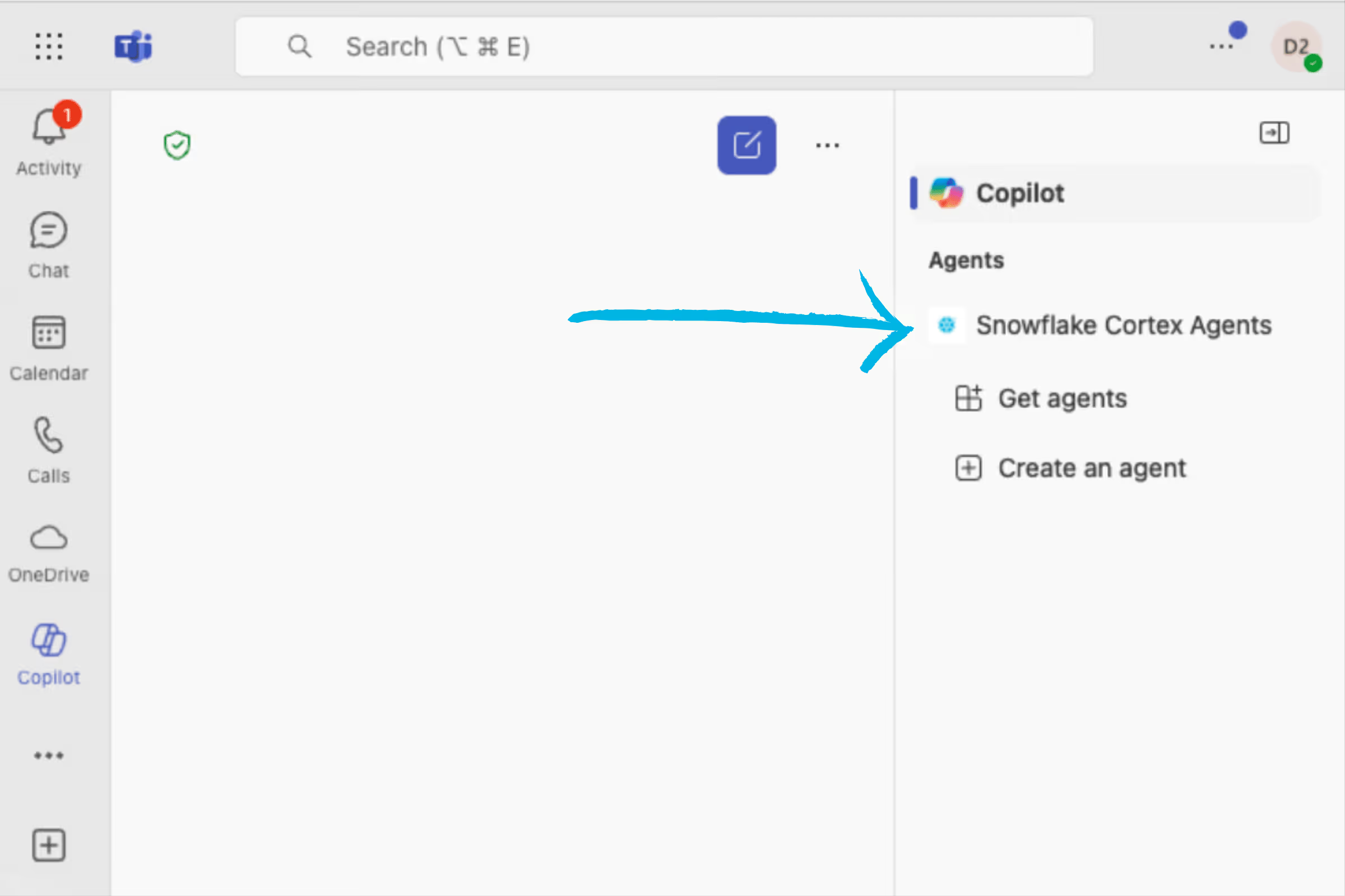
Snowflake Cortex Agents can now be registered as apps inside a Microsoft tenant and accessed directly from Copilot via OAuth authentication. This means:
Users stay inside Copilot Chat or Teams
Snowflake handles data access, security, and computation
Copilot provides the user experience and orchestration layer
Additional capabilities include:
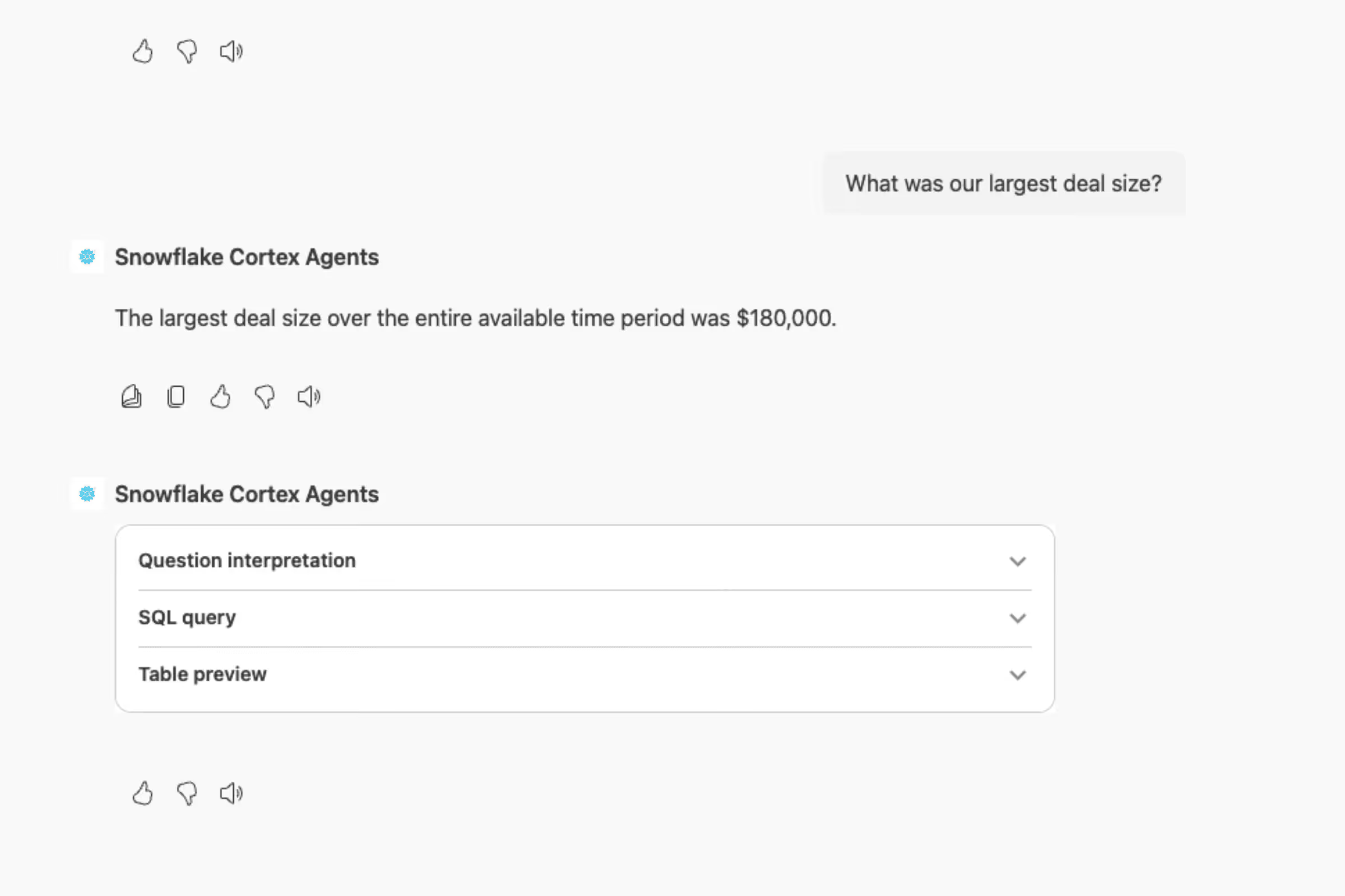
Multi-agent support (switch between specialized agents)
Multi-turn conversations
Transparent “thinking” traces for improved trust and debugging
What This Architecture Unlocks
With this integration, organizations no longer have to choose between:
Agent routing or robust data controls
Citizen developer accessibility or enterprise-grade governance
Instead, they can:
Use Copilot for guided workflows, document generation, and user interaction
Use Cortex Agents for accurate, governed analytics on enterprise data
A Real-World Pattern: Start Simple, Scale Intelligently
One of the most effective adoption strategies we’ve seen is:
Start with Copilot Agents for low-risk, high-value use cases (marketing, proposals, internal knowledge)
Build confidence, habits, and trust in AI-assisted workflows
Gradually introduce Snowflake Cortex Agents as data complexity and accuracy requirements increase
This phased approach reduces risk, avoids overengineering early, and ensures AI adoption is driven by real business outcomes, not novelty.
The Takeaway
Microsoft Copilot and Snowflake Cortex Agents are complements, not rivals. Together, they offer:
A familiar, low-friction user experience
Enterprise-grade security and governance
Scalable, data-driven AI that grows with your organization
For organizations serious about operationalizing AI, this combination represents one of the most compelling enterprise patterns available today.
If you’re exploring how to design, build, or integrate Copilot and Cortex Agents into your data and AI strategy, OneSix can help you move from experimentation to impact fast.