
Share of Operations Managers' day consumed by manual scheduling logistics, the burden the platform is built to eliminate
Field workforce across 10+ locations and two divisions being brought onto a single, real-time scheduling platform
Excel, TSheets, Dynamics CRM, UKG, and email being consolidated into one source of truth for field scheduling
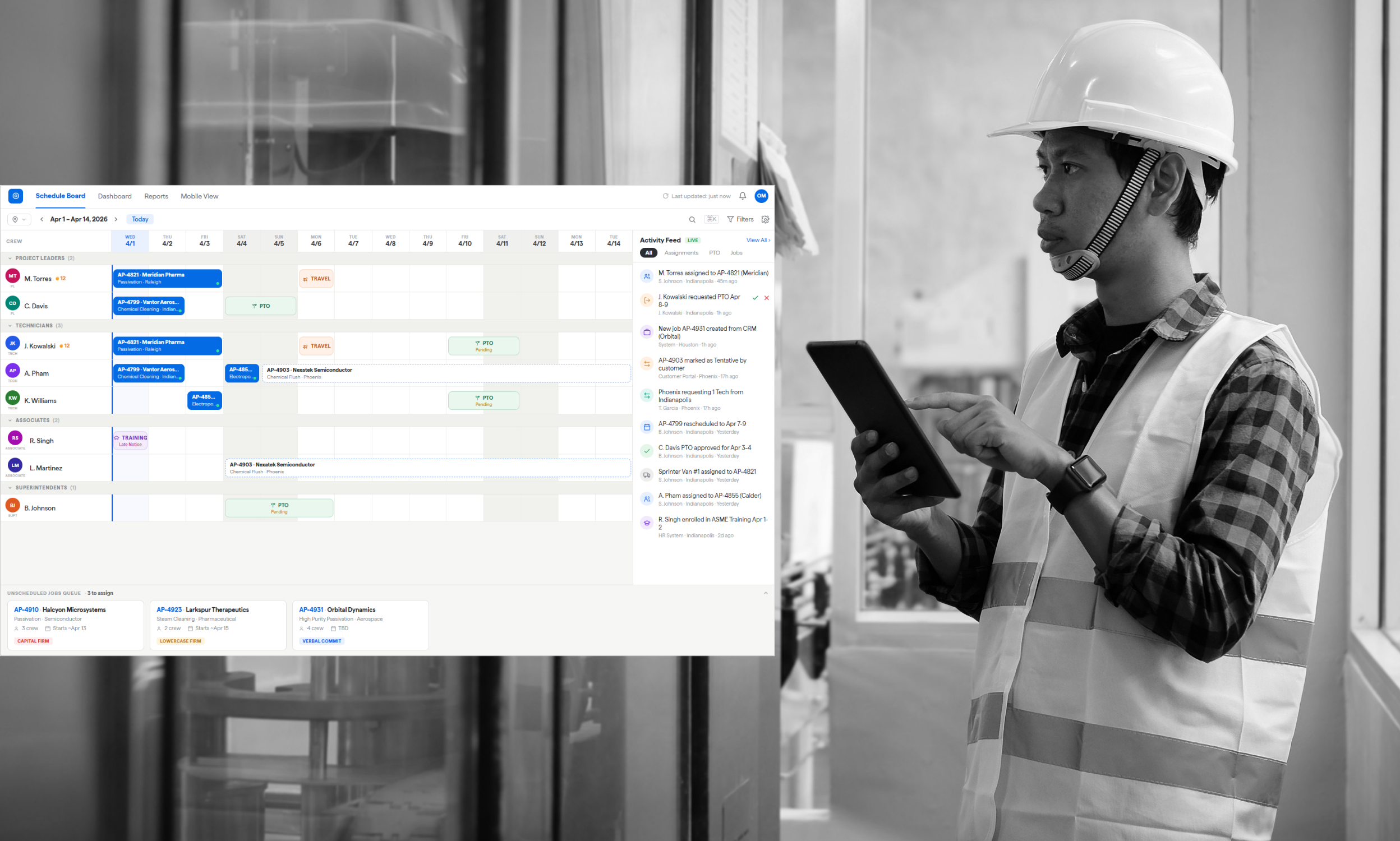
A private equity-backed provider runs a precision cleaning field services business spanning roughly 200 field technicians across more than 10 locations and two operating divisions, Clean Room and Field. Scheduling that workforce ran across a patchwork of disconnected systems (Excel, TSheets, Dynamics CRM, UKG, and email), with Operations Managers serving as the manual integration layer between them. By the company's own estimate, those managers spent 50 to 70 percent of their day on scheduling logistics rather than on running the business.
The deeper exposure was structural. The knowledge that made scheduling work, including crew capabilities, certifications, equipment, and site history, lived with individual schedulers rather than in any system. That left leadership without enterprise-wide visibility and the field workforce without real-time updates. When a scheduler was unavailable, so was the knowledge the business depended on to quote, staff, and dispatch accurately.
OneSix is designing and delivering a Unified Field Scheduling Platform that consolidates these systems into a single source of truth. Rather than ripping out the tools the client already relies on, the platform sits on top of Dynamics CRM, UKG, and Power BI as connective tissue, codifying crew and customer data as structured, queryable information instead of tribal knowledge.
Structured as a 24-week, five-phase program, the platform gives Operations Managers a single place to build and manage schedules, with capabilities that replace the manual workarounds the old process depended on:
As it comes online, the platform establishes enterprise-wide visibility that no longer depends on any single scheduler's memory. A real-time leadership dashboard surfaces utilization, a location heatmap, capacity forecasting, and a scheduling pipeline from unscheduled to completed. The platform is being rolled out location by location through a train-the-trainer model with Operations Manager sign-off at each site before go-live.
By structuring crew, customer, and scheduling data for the first time, it also lays the foundation for later phases: digital field reporting to replace paper daily reports and safety checklists, and an intelligence layer spanning conflict detection, crew recommendations, and demand forecasting off the CRM pipeline.
More to explore

OneSix developed a scalable, adaptive machine learning platform to detect abusive content in real time, enabling a tech company to enhance online safety for children while continuously adapting to their evolving communication styles.
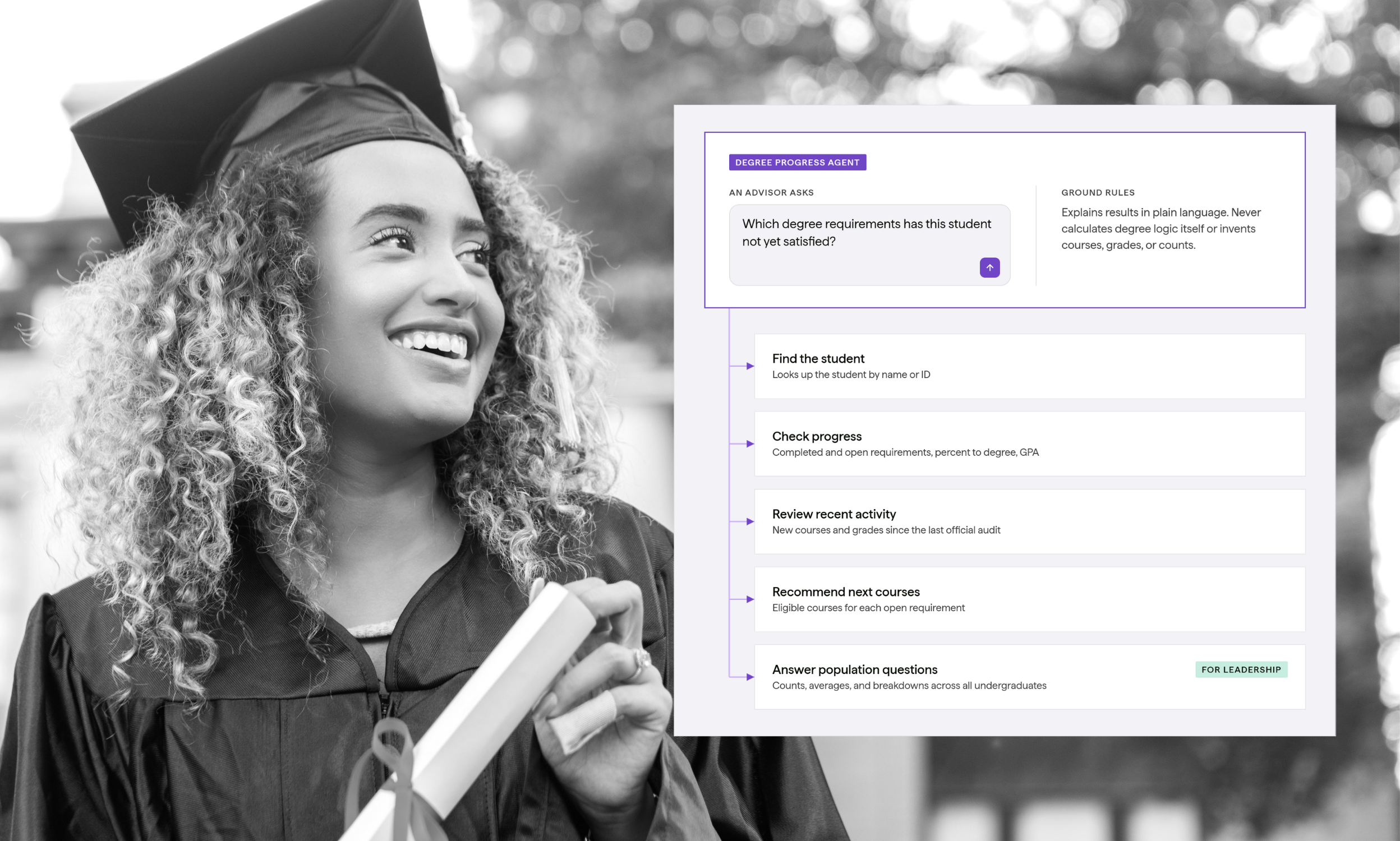
A public research university’s degree audits went stale every time a student added a course or changed majors. OneSix built a Snowflake pipeline and AI agent that show advisors live, requirement-level progress for every undergraduate.

OneSix built a staffing optimization tool that forecasts patient demand and generates rotating schedules, cutting workforce planning from months to a week.